The Playbook Problem
For years, sales playbooks were the backbone of go‑to‑market teams. Sales teams kept binders, PDFs, and internal knowledge bases that promised to encode the “secret sauce” and scale it across the org. They provided structure for new hires, a common language for managers, and a consistent, approved rulebook for customer interactions. But the sales world shifted faster than the documents did. Nowadays, playbooks spend more time collecting dust in digital archives than they do under the impressionable eyes of new or tenured sales reps. In this reality, the winning play is to move from static, isolated documentation to real‑time, tech‑assisted workflows that hardwire best practices into the tech reps are already using. This is a silent revolution known as sales guidance, and it’s taking the world by storm.
Your Typical Sales Playbook
Sales playbooks are centralized, easy‑to‑use guides that outline how a sales team should approach prospects, run discovery, handle objections, and ultimately close deals. Think of them as the “operating manual” for your sales team. Before hopping on the phones, reading the playbook lets you familiarize yourself with the agreed-upon rules and strategies. Stumped on a call? A sales playbook should act as a reference guide to learn what you could have done better.
A strong sales playbook typically includes:
Ideal Customer Profiles (ICPs) and key buyer personas
Discovery frameworks and qualification methods (like BANT or MEDDIC)
Messaging and value propositions tailored to each segment
Step‑by‑step sales processes, from first touch to renewal
Objection‑handling guidance and scenario responses
Templates and scripts, such as call scripts, email templates, and demo flows
Competitive intelligence and differentiator talking points
KPIs and success metrics that guide reps toward high‑value activities
To their credit, sales playbooks were helpful as the first attempt at establishing order and consistency in sales organizations. With clear expectations and proven tactics at their fingertips, sales reps could ramp faster compared to spending hours with a sales manager showing them the ropes.
However, sales playbooks are a bit of a relic for a couple of crucial reasons.
They become outdated the moment they’re published
The core issue is not that playbooks are inherently bad; it’s that they’re static, unenforced, and too broad. They don’t reflect real selling environments where context changes by the minute. If your organization has a sales playbook, when do you think it was last updated? A PDF published last quarter can quietly drift out of alignment with what buyers value today, making it more harmful than helpful if sellers treat it as current. Put bluntly, relying on static playbooks is like navigating with a paper map in the age of GPS.
Reps don’t use them in the moment of action
Even when the content is good, sales reps often can’t access it at the precise moment they need it. A rep on a live call won’t pause to hunt through a wiki. They’ll improvise, risking inconsistent qualification and objection handling strategies. Leading practitioners flag that traditional playbooks create “hunting behavior”—time‑consuming searches that happen after the call, not during the moment of action, which means the guidance arrives too late to affect outcomes.
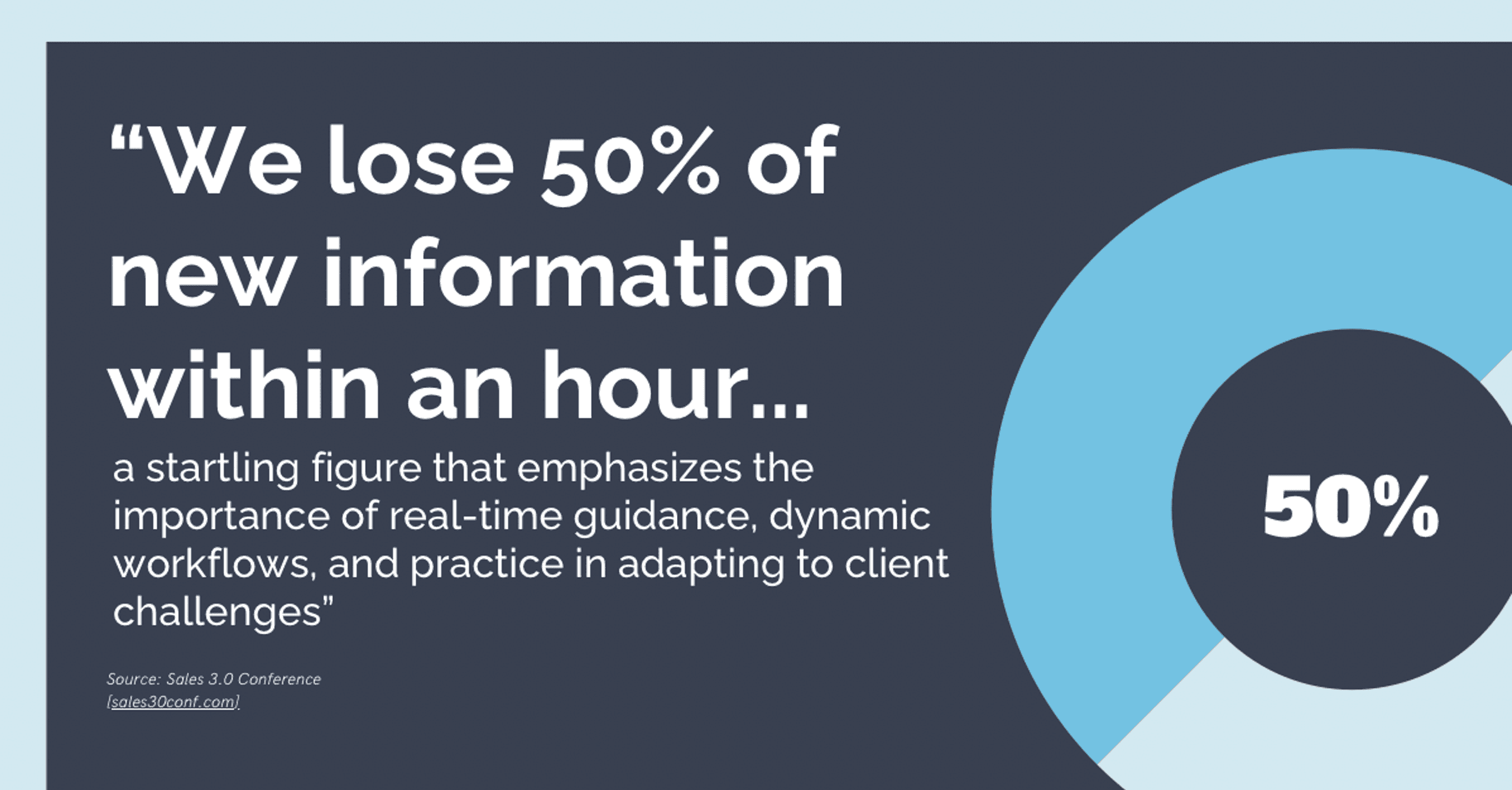
Sales teams must also face the facts about human learning patterns. In our daily lives, we lose a large share of new information soon after we encounter it. That’s why once‑and‑done training-tied playbooks—the once-over reps give them during onboarding week—hardly ever pay off in the long run. Sales 3.0 Conference reports that “we lose 50% of new information within an hour”, a startling figure that emphasizes the importance of real-time guidance, dynamic workflows, and the ability for new reps to practice adapting to client challenges until they can internalize the sales wisdom bound to your playbook.
How the Modern Sales Environment Has Changed
Sales cycles are changing, reps must adapt in the moment
Sellers must shift from pitching to consulting, adding insight at the exact right moment. Analyses of modern enablement emphasize that reps need practical, immediately useful guidance to match informed buyers in real time. Static documents can’t adapt mid‑call; dynamic guidance can.
Tech stacks have become central to sales execution
Your CRM, conversation intelligence, sequencing platform, and enablement tools already mediate how work gets done. Thought leadership on modern playbooks argues that the best outcomes happen when guidance is delivered inside these tools and aligned to the process stages reps live in, not on a separate page in a wiki.
AI has raised the bar
AI means reps now expect insight and next‑best actions drawn from large data sets. Teams that cling to PDFs and annual playbook updates fall behind organizations using AI to keep guidance current and contextual. This sentiment has been echoed by sales leaders pushing for conversational, on‑demand enablement.
Sales Guidance and Embedded Intelligence
What is Embedded Intelligence?
Embedded intelligence is the codification of best practices directly into the tools sellers use every day, surfaced at the exact moment a rep needs them, and continuously refined based on outcomes. It’s direction that adapts to the current moment in the conversation and the current stage of the deal.
Three Examples of Embedded Intelligence in CapOptix
Below are three prime examples of how a sales guidance platform like CapOptix can embed best practices inside its workflows, so reps don’t have to hunt for a PDF when they’re mid‑call.
CapOptix Smart Checklists
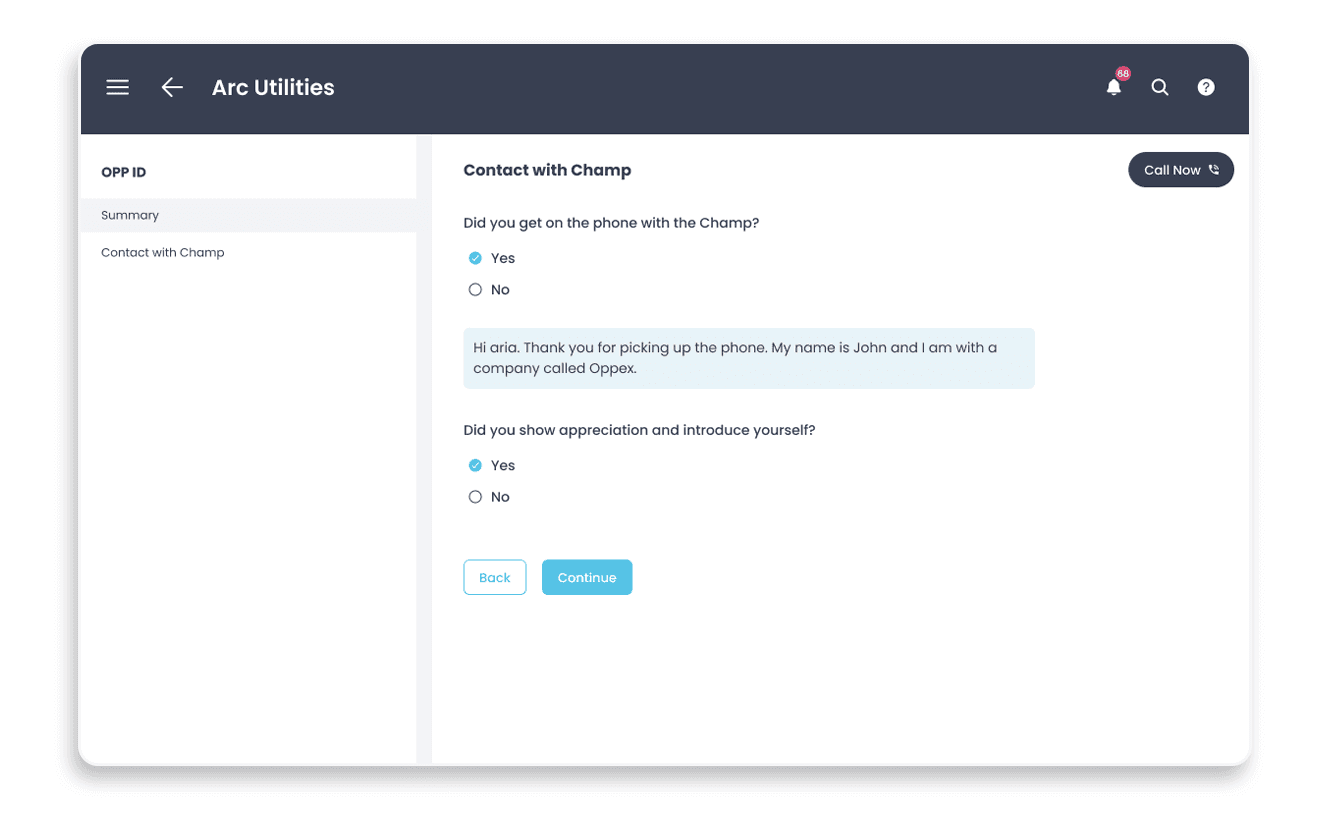
The smart checklist is one of the most fundamental and innovative tools of CapOptix. For every major task in the sales process, such as a discovery call or a business case presentation, CapOptix provides a call checklist. These are dynamic checklists that guide sales reps through calls, meetings, and sales activities step by step.
Questions
Each page of the checklist contains a sequence of guided questions to nudge reps to cover the required talking points and achieve the predefined objectives of the meeting.
Scripts
While the questions act as general prompts, embedded scripts give beginners “training wheels.” Seasoned reps can hide the scripts for a cleaner, flexible view.
Emails
Upon completion of a checklist, an automated follow-up email is sent to call participants that summarizes the call and outlines the key next steps.
Dynamic Routing
Crucially, checklists adapt in real time to the flow of the conversation. For example, if you encounter an objection on a call, the checklist can provide a corresponding contingency that was previously input by the rep. This is a prime example of CapOptix delivering exactly what you need, when and where you need it.
Sales Journey Map
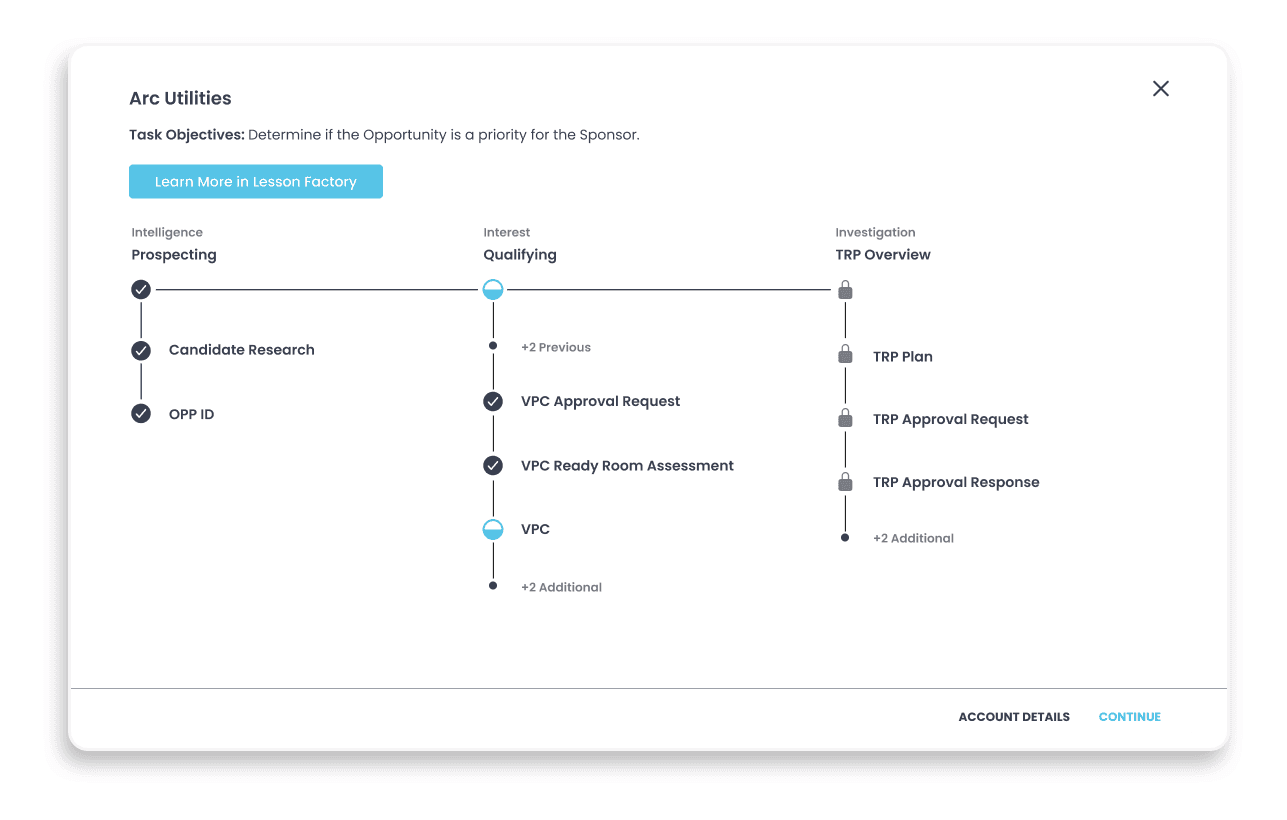
The ideal sales process is embedded into the platform and visible to everyone. Stage changes must follow the defined path, which has been optimized for consistent qualification, a consultative sales process, and a co-designed product. Since every opportunity follows this sequence, managers gain a transparent, real‑time view of deal status and risk, replacing subjective updates with process‑driven signals.
Priorities Page
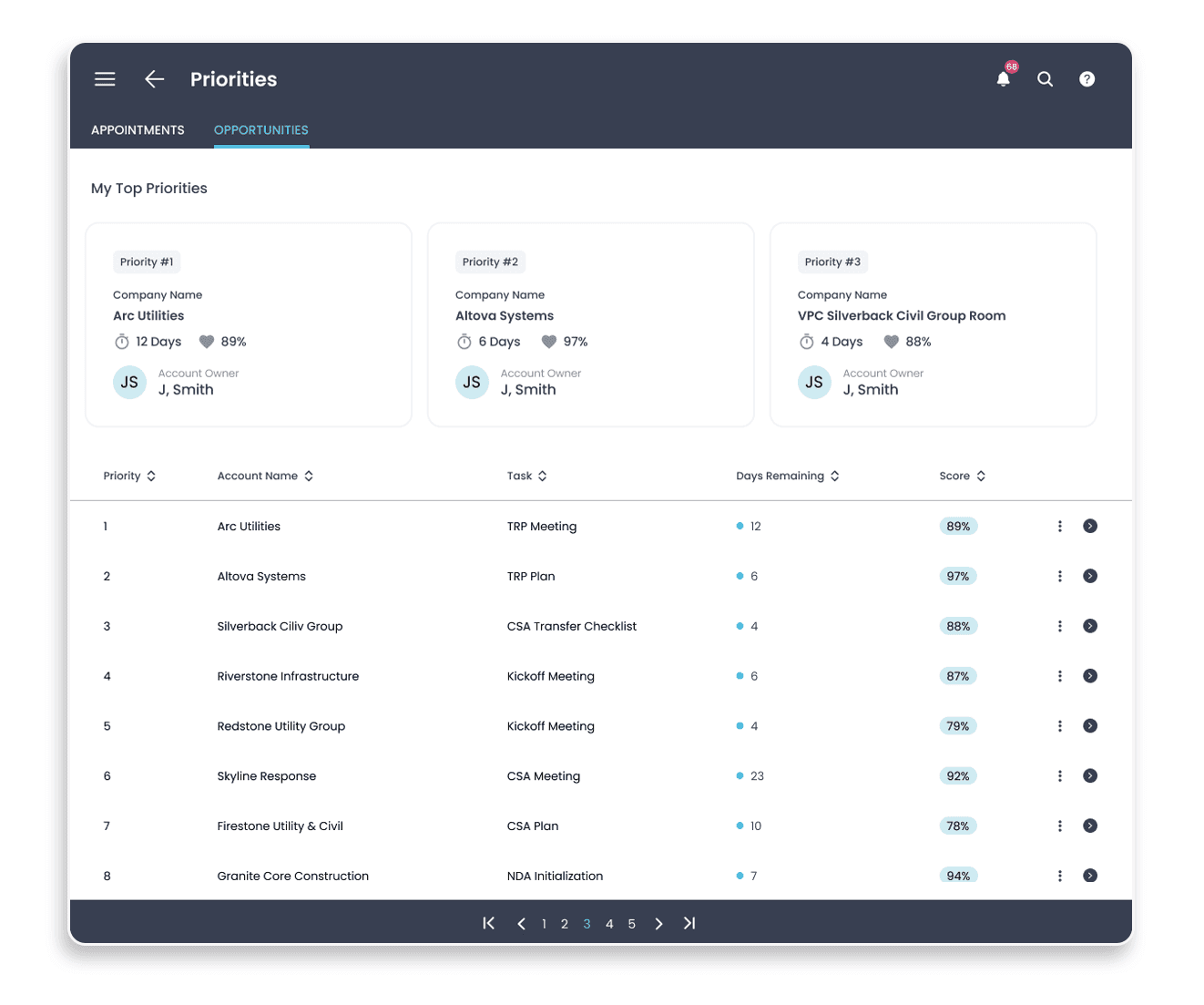
The priorities page is your single, prioritized task list that updates after every action, whether it’s a call logged, email sent, or a meeting booked. Reps work the list rather than wasting time sorting spreadsheets or chasing poor‑fit leads, allowing their focus to automatically shift to the most impactful activities.
These patterns reflect widely recommended best practices: embed guidance in the system of action, deliver contextual prompts, and update continuously so sellers don’t have to translate static advice into dynamic situations on their own.
How Sales Guidance Transforms Team Performance
It reduces the friction of implementing advice
When guidance is embedded, new hires ramp faster because the right actions and language are visible at the moment of use. Contextual prompts update continuously so sellers don’t have to translate static advice into dynamic situations on their own.
It eliminates manual coaching bottlenecks
Managers can’t be on every call. With embedded guidance, coaching scales effortlessly across your whole team. This “always‑on coaching” model reduces the overreliance on ad‑hoc, after‑the‑fact guidance (a hallmark of static playbooks) and turns best practices into underlying guardrails that are present for every rep, every time.
It increases pipeline quality and win rates
Consistent qualification, messaging, and timely next actions create a cleaner pipeline and higher conversion. Analyses of outdated playbooks note that when guidance doesn’t match buyer reality, cycles lengthen and win rates slip. Put contextual guidance first and you reverse those outcomes.
Conclusion: The Future of Sales Enablement Is Dynamic
Organizations that cling to static playbooks will fall behind teams that embed guidance into the seller’s flow of work. The winners will standardize excellence, scale coaching, and improve pipeline quality by operationalizing best practices where they matter most. As leading voices have argued, static playbooks are relics; the future is conversational, contextual, and continuously updated. In other words, sales guidance built directly into the tools reps use already.
Interested in bringing your best practices to life in your tech stack? CapOptix can help! Book a product demo at CapOptix.com to learn more. The sooner you move from PDF to in‑product guidance, the sooner your team can hit the ground running in the new era of guided selling.
Sources
https://www.salesforce.com/blog/sales-playbook/