For years, sales teams have been taught to chase volume: pump up those call numbers, beef up that lead inventory, and, above all, keep the pipeline full. Despite our best efforts, sometimes revenue stubbornly refuses to follow. If this sounds familiar, you are not alone. Modern buyers have changed the rules, and the old lead-centric playbook is no longer enough.
Signal-based selling offers a way forward by helping teams focus less on how many leads they have and more on which opportunities are actually alive.
The Problem with Counting Leads Like Coins
Lead volume is easy to measure, which is why it became popular. It feels like progress, like back-to-back meetings in a calendar. But anyone who’s ever had meetings where the talk goes in circles knows that activity and progress aren’t always the same thing.
Sales teams feel this every quarter:
Reps are busy but deals stall
Pipeline reviews feel like guesswork
Forecasts rely on optimism instead of evidence
Filling your pipeline with noise distracts you from focusing on the real hidden gems. What reps really need is a curated list that shows where there’s potential for real conversations.
Why Lead Quantity ≠ Deal Quality
Marketing-qualified leads (MQLs) were designed for a simpler time, when one buyer filled out one form and talked to one salesperson. Today, buying committees are larger, research happens long before sales gets involved, and decisions move in scattered bursts. An MQL is basically just a chance to play the game, not the surefire victory it used to be.
So, What Should Teams Rely On?
Signal-based selling looks at more than just initial interest. Instead of asking, “Did this lead qualify?” teams ask, “What is happening with this opportunity right now?”
Think of static scoring as a photograph taken at the first cold call. Signals are a livestream giving you real-time feedback signals. They show movement, pauses, and direction, which is exactly what sales needs to prioritize work day=to-day.
What Sales Signals Actually Matter
Not all signals are created equal. The ones that matter most tend to show up where buyers invest time and attention.
High-value signals include:
Meeting-based intent signals that reveal real buying questions
Engagement across multiple stakeholders
Time gaps between touchpoints that show momentum or decay
Low-value signals often include single content downloads from a website or one-off event attendance. Those actions show curiosity, not commitment. Meetings are especially powerful signals when captured with structure. What buyers ask, what they react to, and what they request next all say more than a form fill ever could.
How CapOptix Identifies and Scores Opportunities
CapOptix applies signal-based selling from opportunity identification all the way to closing.
Its scoring logic focuses on:
Opportunity-fit, captured from prospect alignment with your ICP
Intent, captured directly from answers to key questions in dynamic call checklists
Engagement, measured by time between touchpoints and interactions
Notably, CapOptix avoids subjective momentum scores (no more forecasting with gut-feeling). Instead, it relies on observable signals that reflect real buyer behavior. The result is a clearer view of which opportunities are real and which are simply lingering.
Case Study: Reachdesk Improves Win Rates with Intent Signals
Reachdesk, a B2B gifting and direct mail platform, had no shortage of demand. Leads were coming in steadily, MQL targets were being hit, and activity levels looked strong. But sales outcomes told a different story. Reps were busy, pipelines were crowded, and too many deals stalled early. The core issue was not effort. It was focus.
Reachdesk found that traditional lead indicators were pushing sales teams toward accounts that looked active but were not actually ready to buy. A content download or event registration triggered follow-up, even when there was no clear buying intent behind it. Reps ended up spreading time across too many low-quality opportunities.
To fix this, Reachdesk shifted from lead activity to intent signals. Instead of asking how many leads entered the funnel, the team prioritized accounts that showed real purchase consideration. That meant focusing on signals like active research, meaningful sales conversations, and clear next steps coming out of meetings.
Low-signal activity was intentionally deprioritized. A single asset download without follow-up engagement no longer drove immediate sales action.
The impact was immediate. Pipelines became smaller but healthier. Sales conversations were more focused, discovery improved, and managers had clearer evidence during pipeline reviews. Forecast discussions shifted from gut feel to observable buyer behavior.
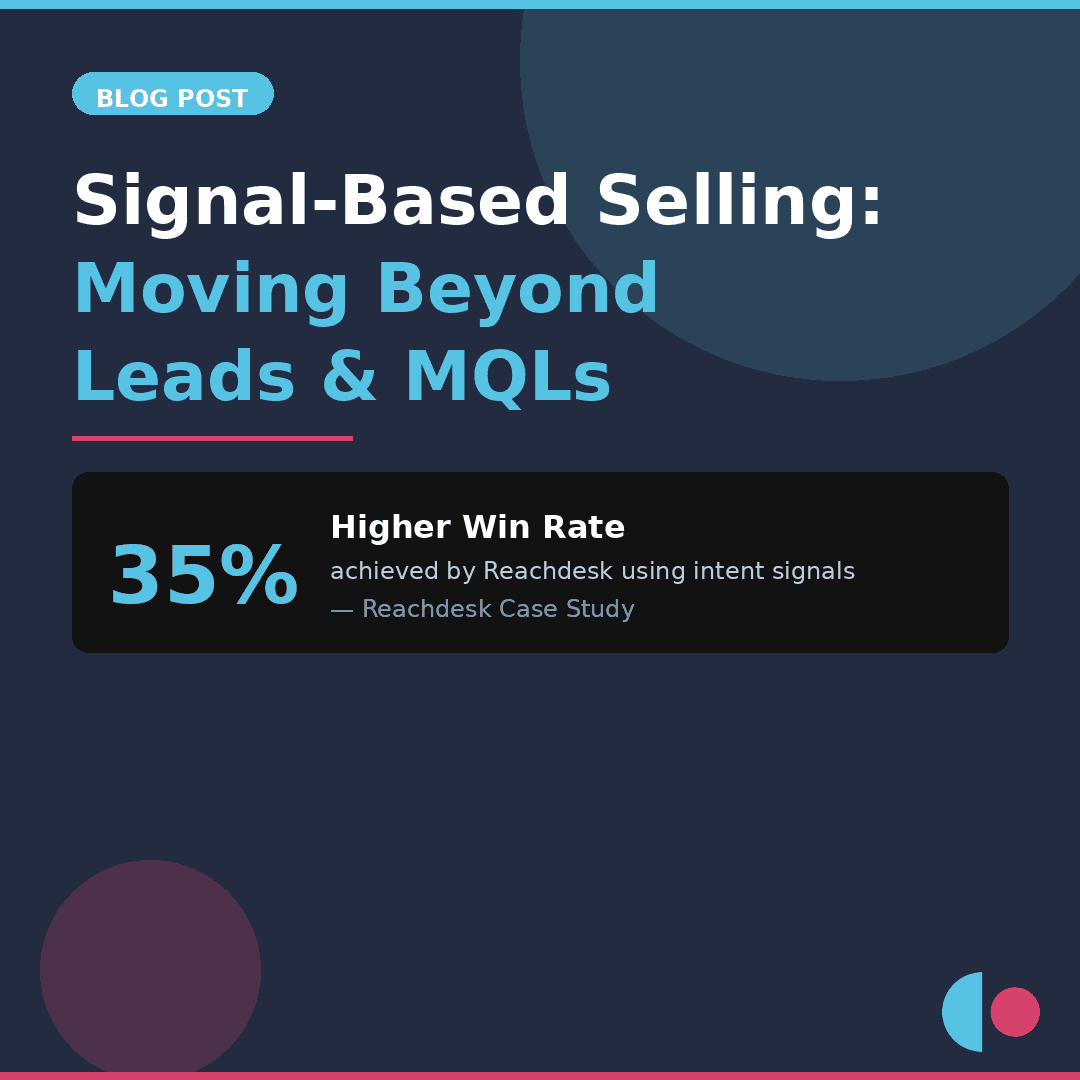
The results were hard to ignore. Reachdesk reported a 35 percent higher win rate, driven by better prioritization rather than increased volume. By listening to intent signals, the team aligned effort with buyer reality and turned a noisy pipeline into a focused revenue engine.
How Sales Teams Can Start Signal-Based Selling Today
Getting started does not require ripping out your stack. Small changes make a big difference:
Add structure to sales meetings to capture intent consistently
Track time between touchpoints, not just activity counts
Review pipeline weekly by asking what signal changed
Good questions lead to better focus. “What changed this week?” is often more useful than “How many leads came in?”
The Future of Revenue Is Signal-Driven
Signal-based selling reflects how buyers actually buy. It replaces noise with clarity and guesswork with evidence.
Revenue teams that learn to listen to signals, rather than chase volume, move from hope-based selling to informed execution. Platforms like CapOptix exist to make that shift practical, not theoretical.
In the end, the goal is simple. Spend time on opportunities that are alive and stop mistaking motion for progress.
References (APA)
Gartner. (2025). Gartner sales survey finds 61% of B2B buyers prefer a rep-free buying experience. Gartner Research.
Gong. (2024). Canva boosts revenue and rep capacity with revenue intelligence. Gong Customer Stories.
Reachdesk. (2025). Reachdesk achieves 35% win rate with intent data. CaseStudies.com.